
I’ve often been accused of being too negative in my Antisocial-Media posts with respect to Canada, Ontario and Niagara. Far from it, I only hope to get the powers that be to think outside of the box, and realise that the Status-Quo (as Premier Doug Ford put it) is not a recipe for success.
But to put all your eggs in one basket is also courting disaster. This was proved across the globe with the COVID-19 pandemic and golbal shutdown of Tourism.
To mitigate the risks of a tourism-reliant economy, the Niagara Region could strategically balance the province’s Destination Niagara Strategy by targeting investments in high-growth, non-tourism sectors.
By leveraging Niagara’s status as Canada’s first designated Foreign Trade Zone (FTZ) Point, its robust advanced manufacturing footprint, and recent massive clean-energy investments, the region is uniquely positioned to attract capital into aerospace propulsion, dual-use defence tech, electric vehicle supply chains, and green manufacturing. This approach transforms infrastructure upgrades originally intended for tourists—such as airport expansions and highway widenings—into industrial catalysts.
Existing business that could expand

Aero-Tech and Autonomous Systems
The provincial goal to upgrade the capacity of the Niagara District Airport under the Destination Niagara Strategy opens a massive window for aerospace and defence investment. Rather than treating the airport strictly as a regional tourism gateway, economic development can target specific niches:
- Electric Propulsion and VTOLs: Niagara can capitalize on aerospace trends by attracting R&D and assembly operations for drones, electric vertical take-off and landing aircraft (VTOLs), and advanced radar systems.
- Synergies with the EV Supply Chain: The region recently secured a landmark $1.6 billion investment from Asahi Kasei for an Electric Vehicle battery separator plant in Port Colborne. This creates an immediate regional value proposition for companies developing battery-powered aircraft and electric propulsion systems.
- Logistics and MRO Hubs: Building on the footprint of global giants like Airbus Helicopters—which operates an integrated distribution centre in the region—Niagara can attract further Maintenance, Repair, and Overhaul (MRO) facilities, leveraging its proximity to the U.S. border.
Environmental Technologies & Green Manufacturing
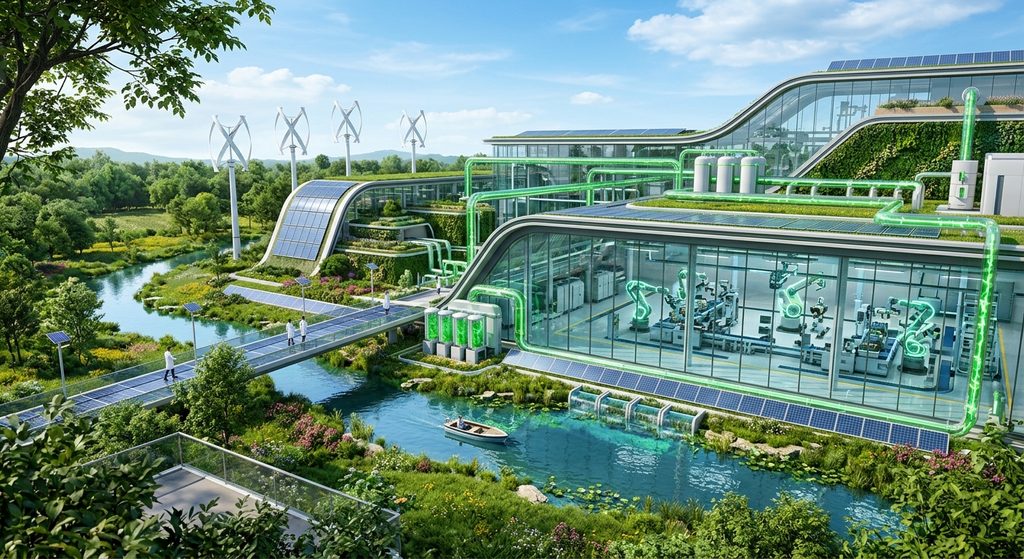
To combat the “all eggs in one basket” tourism scenario, regional development is already shifting toward smart industrial specialization. Investors can look to capitalize on specialized manufacturing infrastructure:
- The Niagara Falls Industrial Park: This newly launched 250-acre industrial park situated between the Queen Elizabeth Way (QEW) and Sodom Road is explicitly designed to bring in heavy manufacturing jobs and diversify the local tax base away from hospitality. It provides prime land for green-tech companies focusing on industrial component manufacturing.
- Advanced Fluid and Material Processing: Existing regional precision manufacturers, such as Hastec Group (advanced fluid processing equipment) and Valbruna ASW (specialized steelmaking for energy and infrastructure), provide a mature, highly capable supply chain for environmental technology firms requiring complex fabrication, automation, and precision machining.
- Agri-Tech and Clean Greenhouse Systems: Alongside Niagara’s multi-million dollar grape and wine support programs, there is a growing cluster of environmental engineering firms developing automated, energy-efficient greenhouse technologies and mechanized farming solutions.
Let’s get the Jump on the U.S.
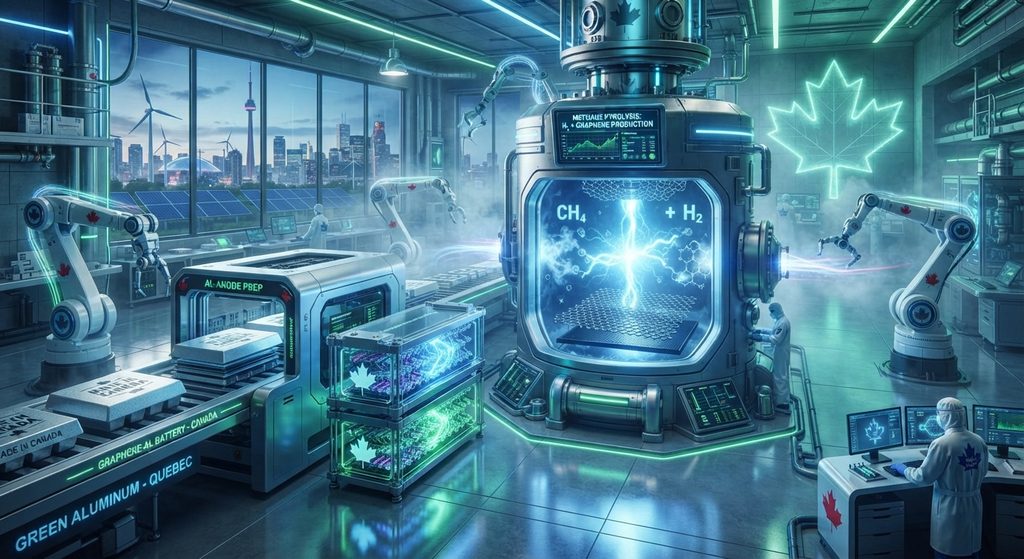
We could go one better. A small Company out of Australia the Brisbane-based Graphene Manufacturing Group (GMG), is looking for international partners for development of it’s Battery Technology.
Intercepting Graphene-Aluminium (G-Al) battery manufacturing and steering it toward the Niagara Region is a highly viable strategic play. While GMG has actively looked at U.S. manufacturing sites to capture immediate incentives from the U.S. Inflation Reduction Act (IRA), Canada—and Ontario specifically—can mount an incredibly competitive counter-proposal.
Stacking the Incentives: Matching the U.S. Pitch
The primary reason GMG and similar firms default to looking at the USA is the aggressive funding structure of the American IRA. However, Canada’s matching mechanisms—especially when combined with Ontario’s manufacturing credits—can achieve near-parity for capital expenditure (capex) and R&D:
| Incentive Mechanism | U.S. Equivalent (IRA) | Canadian / Ontario Stack (Niagara Advantage) |
|---|---|---|
| Capital Equipment Tax Incentives | 30% Advanced Energy Project Credit (48C) | Ontario Made Manufacturing Investment Tax Credit (OMMITC): 15% refundable credit + Federal Clean Technology Manufacturing Investment Tax Credit: 30% refundable tax credit. Combined, these drastically lower upfront tooling costs. |
| Immediate Asset Depreciation | 100% Bonus Depreciation | Ontario Competitiveness Tax Cut: Matches the federal measure allowing an immediate 100% first-year write-off on advanced manufacturing machinery and equipment. |
| R&D Cost Recovery | Research & Experimentation Tax Credit | Federal SR&ED + Ontario Innovation Tax Credit (OITC): Stacks to allow a 43% refundable return on qualified research expenditures. This is vastly superior to U.S. R&D credits for early-stage chemical and metallurgical optimization. |
| Direct Scale-Up Grants | DOE Loan Programs Office | FedDev Ontario Business Scale-up and Productivity (BSP): Offers up to $10 million in interest-free funding. Furthermore, the federal Strategic Innovation Fund (SIF) – Net Zero Accelerator can inject tens of millions in direct, non-repayable grants for clean-energy manufacturing facilities exceeding $20 million in scale. |
The technology
G-Al batteries represent a massive technological leap forward over traditional lithium-ion. They charge up to 70 times faster, feature three times the battery life, carry no risk of thermal runaway (fire), and crucially, require zero lithium, cobalt, manganese, or copper.
By pitching Niagara, Canada can present a supply chain, financial, and geographical package that directly addresses the unique manufacturing requirements of graphene-aluminium cell production.
The Niagara Value Proposition for G-Al Manufacturing
To win an investment like GMG away from the U.S., Niagara’s pitch must focus on three core areas, clean energy, raw materials, and regulatory assistance.
Energy
G-Al battery production requires high-quality, scalable graphene sheets and precision aluminium foil current collectors.
GMG’s proprietary method of turning natural gas/methane into high-quality graphene is via Graphene production via plasma-arc synthesis and is an incredibly energy-intensive process.
The Niagara Advantage: Niagara offers direct access to massive, reliable, 100% emission-free hydroelectric power from the Sir Adam Beck Hydroelectric Generating Stations and from our region’s windfarms.
For a company marketing a sustainable, next-generation environmental technology, a zero-carbon manufacturing footprint is a massive asset for attracting global ESG (Environmental, Social, and Governance) investment capital.
The U.S. response has been to offer coal- or gas-heavy electrical grid, undermining the “green” label of the battery.
Raw Materials
GMG’s proprietary plasma-arc technology cracks methane (CH₄) directly into high-quality graphene flakes and hydrogen gas, completely bypassing the dirty, multi-step mining and acid-leaching processes required for natural graphite.
- The Methane Supply Chain: Canada is the world’s fifth-largest producer of natural gas. By locating in Ontario, GMG can source its feedstock directly via the country’s highly developed pipeline network. There is zero reliance on volatile foreign energy imports.
- The Aluminium Powerhouse: The second half of the battery equation is high-purity aluminium foil for the current collectors. Canada is a global leader in low-carbon aluminium production, driven by Quebec’s and Ontario’s clean hydroelectric grids. Sourcing high-grade, infinitely recyclable domestic aluminium reduces transport costs to near zero and provides a bulletproof, inflation-resistant supply chain.
Regulatory assistance
The structural regulatory environment in Canada—particularly under the Canadian Environmental Protection Act (CEPA) and Ontario’s industrial framework—offers massive operational advantages over Australia’s complex state-and-federal overlapping regimes.
1. Accelerated Industrial Chemical Approvals
In Australia, introducing a newly synthesized advanced material like proprietary graphene to a mass manufacturing line requires navigating the stringent Australian Industrial Chemicals Introduction Scheme (AICIS). This process is notoriously slow, costly, and heavily restrictive regarding high-volume chemical synthesis.
In Canada, Environment and Climate Change Canada (ECCC) manages new substances via the New Substances Notification (NSN) Regulations. For advanced green technologies that use closed-loop chemical engineering (where methane is cracked, graphene is captured, and the byproduct is clean hydrogen), Canada provides specialized, expedited assessment pathways. Because graphene is an allotrope of carbon and is processed in solid form within the battery cells, it bypasses many of the toxicological and ecotoxicological hurdles associated with liquid chemical pollutants.
2. Clean Air and Carbon-Accounting Alignment
GMG’s plasma-arc process has a massive environmental selling point: it does not burn the methane. It chemically splits it, meaning there are virtually zero direct CO₂ process emissions.
- The Australian Hurdle: Australian carbon-accounting frameworks often struggle to differentiate between gas-burning industries and gas-cracking advanced materials manufacturing, leading to punitive industrial emissions penalties and prolonged environmental impact studies.
- The Canadian Advantage: Ontario’s environmental regulatory framework actively rewards technologies that utilize methane for carbon sequestration (locking the carbon into solid graphene sheets). This allows GMG to position its plant as a net-negative or low-carbon industrial site, making it eligible for expedited environmental permits from the Ontario Ministry of the Environment, Conservation and Parks (MECP).
Actionable Site Infrastructure: The 250-Acre Blueprint
The final piece of the puzzle is real estate. Niagara is positioned right at the gateway of Canada’s multi-billion dollar EV battery ecosystem. Just south of the region, Port Colborne secured a $1.6 billion investment from Asahi Kasei for an EV battery separator plant. To the west and north sit the massive Volkswagen PowerCo gigafactory in St. Thomas and the Stellantis-LG Energy Solution joint venture in Windsor.
While those gigafactories are locked into traditional lithium-ion chemistry for mass automotive scale, Niagara can position itself as the next-gen alternative battery hub. G-Al technology is perfectly suited to disrupt sectors where lithium-ion struggles: ultra-fast charging stationary energy storage systems (ESS), heavy industrial mining equipment, rail propulsion (aligning with Hitachi Rail Canada), and the specialized, EW-resilient UAV technologies detailed previously.
A chemical-metallurgical facility like a battery plant cannot locate on a standard commercial lot.
The newly launched 250-acre Niagara Falls Industrial Park (strategically located between the QEW and Sodom Road) is an ideal candidate for this type of footprint. It offers heavy-industrial zoning, proximity to heavy rail corridors, robust high-voltage power integration, and direct pipeline access.
Furthermore, by utilizing Niagara’s aforementioned Foreign Trade Zone (FTZ) designation, a manufacturer like GMG can import cell components or proprietary chemical precursors entirely duty-free, assemble the finalized G-Al power packs in Niagara, and ship them seamlessly across the Lewiston-Queenston or Peace Bridge borders into the North American automotive, aerospace, and grid-storage markets without carrying heavy tariff-related cash-flow burdens.
Bonus: The Hydrogen Byproduct Opportunity
A critical economic factor of GMG’s process that often gets overlooked is that for every tonne of graphene produced from methane, the plasma-arc reaction yields significant volumes of high-purity hydrogen gas (H₂).
In the Niagara Region, this byproduct transforms from a waste-management liability into a lucrative revenue stream:
Co-locating with Clean Transport: The hydrogen can be used to fuel regional municipal fleets, heavy industrial equipment, or future zero-emission aviation projects taking off from the Niagara District Airport, creating a perfect circular industrial ecosystem right inside the Niagara Falls Industrial Park.
The Regional Green Hydrogen Strategy: Southern Ontario is actively building a clean-hydrogen economic corridor. GMG could directly pipe or truck its high-purity hydrogen byproduct to nearby transport hubs or industrial users.
Post-Secondary R&D and Innovation Anchors
Investment can be anchored to the region’s robust academic and institutional research framework, which specializes in commercializing clean-tech and advanced manufacturing patents:
- Niagara College’s WAMIC: The Walker Advanced Manufacturing Innovation Centre provides private companies with low-risk access to commercialization tools. Investors can fund collaborative projects using their expertise in precision metrology, 3D printing, IoT data analytics, and lean manufacturing systems.
- Brock University Innovation Hubs: Through the Brock-Niagara Validation, Prototyping and Manufacturing Institute and the Environmental Sustainability Research Centre, investors have direct pipelines to research in green chemistry, plant biotechnology, and environmental tech.
- Southern Ontario Network for Advanced Manufacturing Innovation (SONAMI): This network links Niagara businesses to broader inter-municipal research facilities (including nearby McMaster University’s Manufacturing Research Institute), allowing local start-ups to scale green technologies efficiently
New Businesses that could be encouraged into the Region

The war in Ukraine has triggered a fundamental paradigm shift in modern military doctrine, demonstrating that the era of multi-million dollar flagship hardware is being disrupted by asymmetric, ultra-low-cost, attritable autonomous systems. Armed forces globally are rapidly pivoting away from complex aerospace primes toward agile, software-defined UAV networks, creating a massive, long-term market for both military and dual-use domestic drone technologies.
By leveraging Niagara’s strategic geography, its network of underutilized regional airports, and its established advanced manufacturing base, the region can establish a specialized cluster focused on Asymmetric UAV Systems, Electronic Warfare (EW) Resilient Architecture, and Counter-UAS (C-UAS) Technologies.
The Global Opportunity: Domestic vs. Military Synergy
The core advantage of modern UAV technology is its dual-use nature. The structural and software challenges exposed on the battlefields of Eastern Europe map directly onto complex civilian and domestic challenges.
- Military Direct Demands: Mass procurement of Class 1 FPV (First-Person View) loitering munitions, thermal-reconnaissance quadcopters, jam-resistant localized mesh-networked drones, and rapid-deployment C-UAS kinetic interceptors.
- Domestic Applications: High-end autonomous infrastructure inspection (hydro lines, wind turbines, the Welland Canal), precise agricultural spraying, border security/surveillance alongside the Niagara River, and deep-woods search and rescue.
- The Business Synergy: R&D can be heavily subsidized by federal defence grants, while the underlying manufacturing and software platforms can be commercialized globally for high-margin civilian commercial logistics and data operations.
Proposed Regional R&D Focus: “EW-Resilient Autonomous Swarms”
The primary technological lesson from the Ukraine conflict is that standard GPS-guided and radio-frequency-controlled drones are rendered useless in heavily contested electronic environments. GPS-jamming and radio-spoofing have achieved near-total neutralization of basic commercial drones.
We could establish the Niagara Region as a leader in Electronic Warfare (EW)-Resilient Autonomous Guidance.
As well as providing for the manufacture of structural carbon-fibre airframes, regional R&D should also focus on the high-value brains of the systems.:
The Niagara Manufacturing & Testing Architecture
The Niagara Region features a unique spatial layout that solves the largest bottleneck in UAV development: the transition from simulation to real-world airspace testing.
1. The Regional Airport Network Strategy
Rather than relying on a single, heavily regulated commercial hub, Niagara can distribute R&D and flight lines across its specific local airfields:
- Niagara District Airport (NOTL): Designated as the Advanced Avionics and MRO Hub. This airport features runway lengths and existing hangar space capable of supporting integration projects that combine manned aircraft with uncrewed systems (MUM-T). It is the perfect anchor for high-tier defence engineering firms.
- Welland/Roseview Aerodrome: Positioned as the Tactical Testing Ground. Located closer to industrial manufacturing parks, this less-congested airspace is ideal for low-altitude flight testing, extreme weather testing, and specialized electronic jamming simulations to test if drone prototypes can survive an EW environment.
- Fort Erie Airport: Serving as the Cross-Border Supply and Corridor Hub. Positioned directly across the border, it naturally anchors companies seeking immediate alignment with Western New York’s aerospace sector and Buffalo-based logistics chains.
2. Local Supply Chain Integration
- Component Prototyping: Niagara College’s Walker Advanced Manufacturing Innovation Centre (WAMIC) can act as the physical factory floor for early-stage components. Using their industrial 3D printing and precise reverse-engineering tools, firms can rapidly prototype aerodynamic hulls, custom gimbal systems, and lightweight enclosures.
- Specialized Materials: Advanced metallurgy firms like Valbruna ASW can develop proprietary, lightweight, electromagnetic-shielded alloy enclosures to protect drone internal avionics from high-power anti-drone microwave weapons.
- Logistics & Assembly: Utilizing Niagara’s Foreign Trade Zone (FTZ) status, manufacturers can import high-grade optical sensors, electric motors, and specialized batteries completely duty-free, assemble the UAVs in local industrial spaces (such as the Niagara Falls Industrial Park), and export the finished tactical or commercial platforms straight to NATO allies or global enterprise customers without severe cash-flow friction.
Funding the Economic Diversification
To accelerate economic diversification across the Niagara Region, a robust matrix of federal, provincial, and regional funding mechanisms can be stacked to offset capital expenditure (capex) and research costs.
An active list of critical financial incentives available for scaling aerospace, clean-tech, and advanced environmental manufacturing in Niagara includes:
Federal Direct Funding & Grants
- FedDev Ontario: Business Scale-up and Productivity (BSP): This program offers interest-free repayable contributions ranging from $125,000 to $10 million. It is specifically designed for southern Ontario clean-tech and advanced manufacturers looking to adopt automated technologies, scale production facilities, or break into global markets.
- FedDev Ontario’s Regional Defence Investment Initiative is tailored for manufacturing and aerospace businesses seeking to enter or expand within defence supply chains, this fund builds the industrial and innovative capacity required for dual-use technologies and could be tapped to finance the secure, perimeter-fenced manufacturing spaces required for controlled military goods.
- Canada’s IDEaS (Innovation for Defence Excellence and Security) Program frequently issues high-value, non-repayable challenges specifically targeting autonomous swarms and anti-jam navigation systems.
- The Controlled Goods Program (CGP) infrastructure is achievable in Niagara, as the region already houses global tier-1 defence contractors (like Airbus Helicopters in Fort Erie), meaning the local economic development boards understand the security and clearance protocols required to handle sensitive military tech.
- NRC IRAP Clean Technology Program: Following a structural pivot, this program acts as a primary vehicle for early-stage green innovation. It delivers non-repayable R&D and advisory funding typically between $100,000 and $500,000 (up to $1 million for deep tech) to help small-and-medium enterprises (SMEs) mitigate technological uncertainty.
Provincial Investment Tax Credits
- Ontario Made Manufacturing Investment Tax Credit (OMMITC): A cornerstone of provincial support, this program delivers a 15% refundable tax credit for Canadian-Controlled Private Corporations (CCPCs) on eligible capital investments. It applies to Class 53/43(a) machinery, precision manufacturing equipment, and Class 1 manufacturing buildings. It is capped at a maximum $3 million cash-back return per year on a $20 million annual expenditure limit.
- Ontario Innovation Tax Credit (OITC) + Federal SR&ED: To incentivize local R&D, Ontario provides an 8% refundable tax credit that stacks directly on top of the federal Scientific Research and Experimental Development (SR&ED) 35% refundable tax credit. This means green manufacturing and aerospace firms can recoup more than 40% of qualified R&D expenditures.
- Ontario Competitiveness Tax Cut: This initiative introduces accelerated capital write-offs, matching federal measures to let businesses immediately write off 100% of the value of machinery, equipment, and a wide range of capital assets in their first year to rapidly free up liquidity.
Niagara Regional & Municipal Incentives
- Niagara Foreign Trade Zone (FTZ) Point: As a designated FTZ, Niagara offers foreign capital investors significant trade efficiencies. This includes duty deferrals, tariff exemptions on imported manufacturing components, and sales tax domestic inventory management programs—immensely beneficial for aerospace assembly or clean-tech component manufacturing reliant on global supply chains.
- The Gateway Community Improvement Plan (CIP): Operating across industrial corridors in Niagara Falls, Welland, Port Colborne, Thorold, and Fort Erie, the Gateway CIP offers a Tax Increment Grant (TIG). Qualifying advanced manufacturing operations receive property tax reductions of between 40% and 100% for 5 to 10 years based on the net increase in property assessment value post-development.
- Brownfield Remediation Incentives: For clean-tech developers choosing to adaptively reuse contaminated or underutilized industrial “gray” sites rather than expanding onto greenfields, Niagara Falls and the broader Region provide specialized Environmental Study Grants and specialized Brownfield TIGs to offset remediation and site setup costs.
That’s today’s brain dump from me.